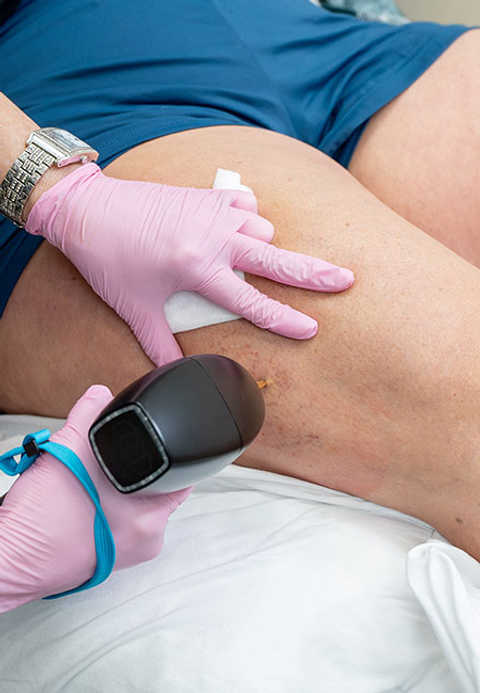
How DiolazeXL Treats Skin
DiolazeXL uses a diode laser to deliver concentrated light into the hair shaft and follicle. Pigment in the hair absorbs that light and converts it to heat, which reduces the follicle’s ability to produce new hair over time. Settings are selected to focus energy on hair while protecting surrounding skin, reducing the chance of superficial skin injury when properly applied.
Treatments are planned around your skin tone and hair characteristics so the device’s energy and pulse duration are adjusted. Providers commonly start with a test area to confirm comfort and response, then scale settings across a larger zone. This customization is essential for balancing hair reduction effectiveness with skin safety on larger treatment areas.
Large Areas and Session Planning
This service is intended for larger body areas such as the full legs, full arms, full back, chest and abdomen, or other large body areas. Appointments for large areas are scheduled for Duration: 45 MINUTES, allowing the team to move methodically while adapting settings based on how your skin reacts during the session.
Multiple sessions are required for progressive reduction, and sessions are typically spaced several weeks apart to match hair growth cycles. Many clients begin treatments in January–March so a full series can be completed and skin can heal before peak summer sun. Evening and weekend appointments cater to commuters using I-75/I-575 and busy local schedules.
Comfort, Safety, and Recovery
Minimizing discomfort and protecting skin are priorities at SUR MedSpa — staff adjust cooling and device settings to your comfort level. Local feedback notes DiolazeXL is far less painful than older systems for many patients. Practitioners check in throughout the session and will pause or modify parameters if you need it, which contributes to a safer, more tolerable experience.
After treatment, temporary redness or mild sensitivity in the treated area is common while the skin recovers. Clients have appreciated that staff will advise rescheduling when topical products or cold sores could raise risk, and the team follows safe scheduling practices. Over time, many patients report reduced reliance on shaving and waxing, though individual results and timelines vary.